

SIP vs Steel
A comprehensive comparison of SIP panel construction against traditional steel wall pools.
Head to Head
The Full Comparison
Every feature. Every detail. See exactly why pool builders and homeowners are switching to SIP panel technology.
Corrosion Resistance
Non-corrosive FRP - lifetime warranty
Rusts within 5–15 years, even with coatings
Insulation (R-Value)
R-16 built-in closed-cell foam
R-0 - no insulation whatsoever
Structural Integrity
Freestanding - holds shape without backfill
Requires compacted backfill to prevent collapse
Installation Time
MCR panel assembly in ~4 hours
Wall bracing and backfill takes 3–5 days
Equipment Required
No crane, no slab, no A-frames - ships on a pallet
Requires heavy equipment, concrete slab, A-frames
Weight per Panel
Approx. 110 lbs per panel
100+ lbs per panel section
Installation Flexibility
Above ground, in-ground, or semi-inground
In-ground only with extensive excavation
DIY Friendly
Yes - designed for unskilled labor
No - requires professional installation
Salt Water Compatible
Fully compatible - no corrosion risk
Accelerated rust with salt systems
Energy Efficiency
R-16 insulation retains heat, lower bills
Heat loss through uninsulated walls
Liner Compatibility
All standard vinyl liner patterns
All standard vinyl liner patterns
The Rust Problem
Steel Corrodes. SIP Doesn't.
Traditional steel wall pools begin corroding from the moment they're installed. Moisture, pool chemicals, and especially salt water systems accelerate the process. Within 5–15 years, rust compromises structural integrity.
Our SIP panels use fiberglass-reinforced polymer that is completely impervious to corrosion. Our SIP Panels are rated for salt water systems with zero degradation over the lifetime of the pool.
Learn About SIP Construction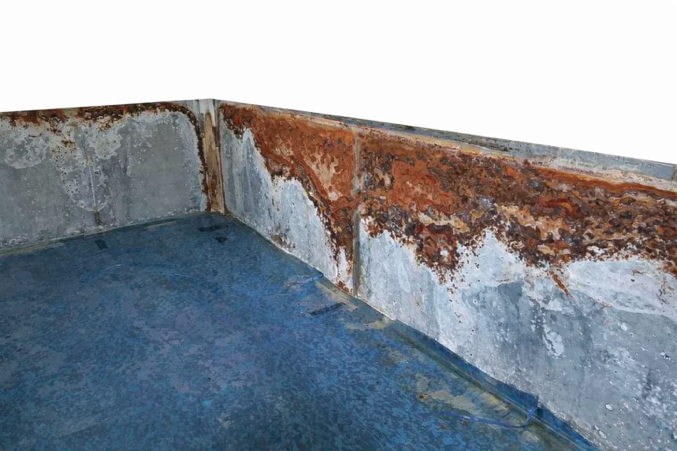
Make the Switch to SIP
Join the growing number of homeowners who chose the smarter pool technology.